

What it involves
Soil electrical resistivity is a geophysical technique that maps subsurface properties without invasive drilling, using a Wenner four-electrode array run per ASTM G57-20. It's most commonly used for site characterisation and slope stability inputs across Melbourne, regional Victoria and the Greater Brisbane area, and for assessing corrosion risk to buried metal assets like pipelines and earthing systems.
Applications
- Site characterisation
- Slope stability
- Foundation design
- Corrosion of buried assets
What you receive
- Resistivity vs depth data
- Subsurface property report
- Stability recommendations
Method & standard
Wenner four-electrode array per ASTM G57-20. Carried out to ASTM G57-20 by Probegeo's MIEAust-certified engineers.
Where we provide this service
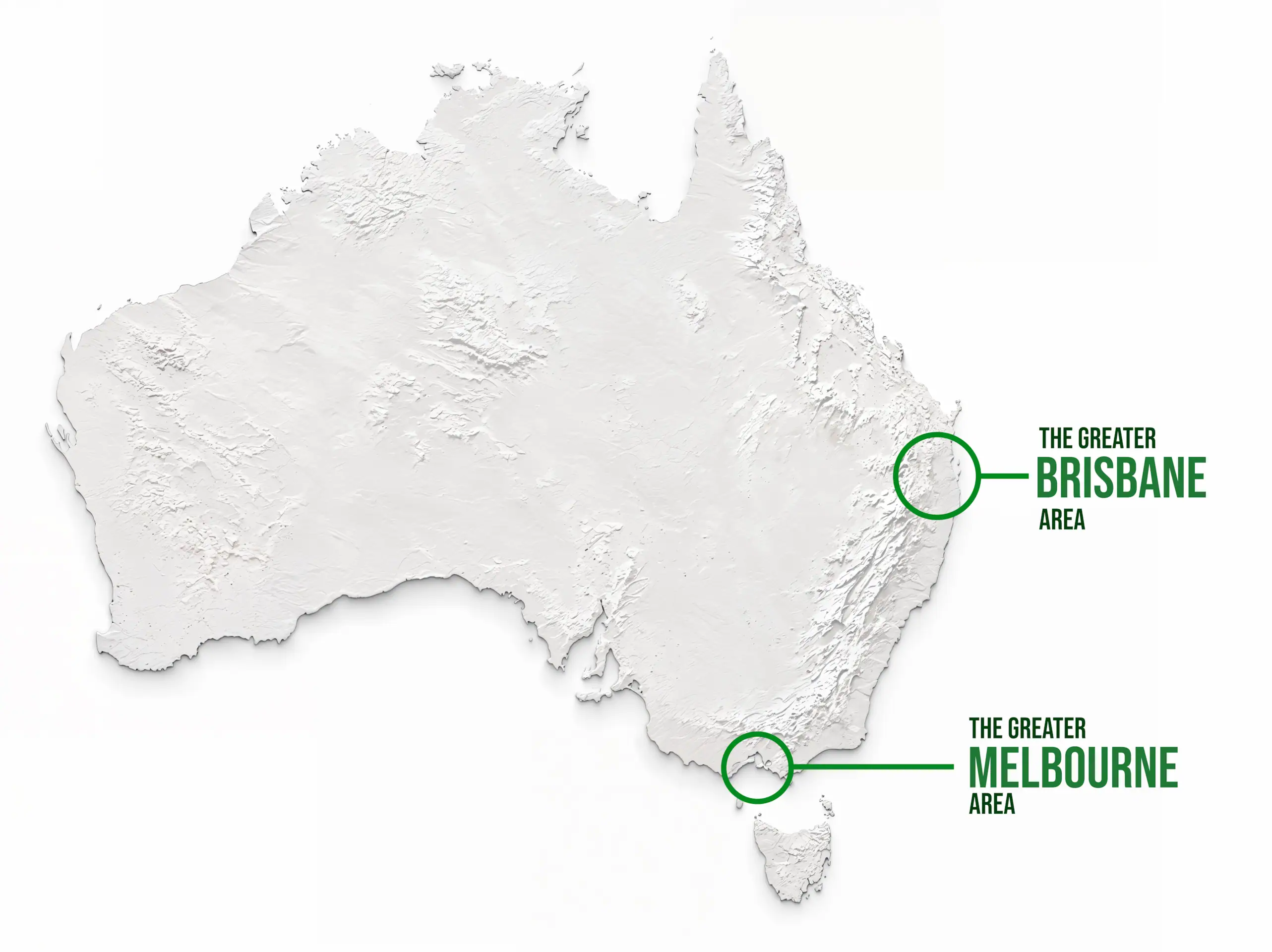
Soil Electrical Resistivity is available across the Greater Melbourne area and regional Victoria, plus the Greater Brisbane area as a mobile, BPEQ-registered operation.
- Melbourne & regional Victoria
- Brisbane & South East Queensland
Common questions
When is resistivity testing used instead of drilling?
Resistivity testing is non-invasive and covers ground quickly, making it useful for early site characterisation, corrosion risk assessment of buried assets, and as a complement to (not a replacement for) borehole-based investigation.
What do I get from a resistivity survey?
Resistivity-versus-depth data, a subsurface property report, and stability or corrosion recommendations depending on your project brief.